
Moving Resources

Packing Guide

How to pack each room the way professional movers do — room by room, with the Titan labeling system that keeps every box organized from the truck to the right room.

Before You Pack

Good packing starts before the first box. Declutter first — every item you donate or toss is one you do not pay to move. Then pack one room at a time, finishing each before you start the next, so nothing gets stranded and every box has a clear home.

  • Pack the rooms you use least first — storage, guest rooms, the garage.
  • Keep a “Do Not Load” zone going from day one for valuables, essentials, and anything you were told not to load.
  • Fill boxes fully but keep each under about 50 lbs so it stays safe to carry.

Packing Supplies

The right supplies make the difference between boxes that survive the truck and boxes that fail on the stairs. Buy a little more than you think you need — running out mid-room is what leads to overpacked, under-protected boxes.

  • Small boxes for heavy items (books, canned goods); large boxes for light and bulky.
  • Quality packing tape — the cheap stuff lets go under weight.
  • Packing paper and bubble wrap; dish barrels and wardrobe boxes for the tough rooms.
  • A couple of bold markers, and a roll of painter’s tape for labeling.

How to Label Boxes

Labeling is where most moves are won or lost. A box marked only “misc” gets set down anywhere; a clearly labeled box gets carried straight to the right room and handled the right way. Titan uses a simple, consistent format.

ROOM CONTENTS HANDLING

  • KITCHEN — GLASSWARE — FRAGILE Carried carefully, straight to the kitchen, loaded so nothing sits on top of it.
  • PRIMARY BEDROOM — BEDDING — LOAD LAST Light, needed first, and easy to grab off the truck on night one.
  • OFFICE — BOOKS — HEAVY A small box the crew knows to lift and stack correctly.

Moving to more than one place? Label by destination.

For multi-stop moves — a storage unit and a new home, say — lead the label with where the box is going. It comes off the truck at the right stop, every time.

  • STORAGE — GARAGE TOOLS Comes off at the storage unit, never rides to the new home.
  • NEW HOME — PRIMARY BEDROOM Goes straight to the house and the right room.
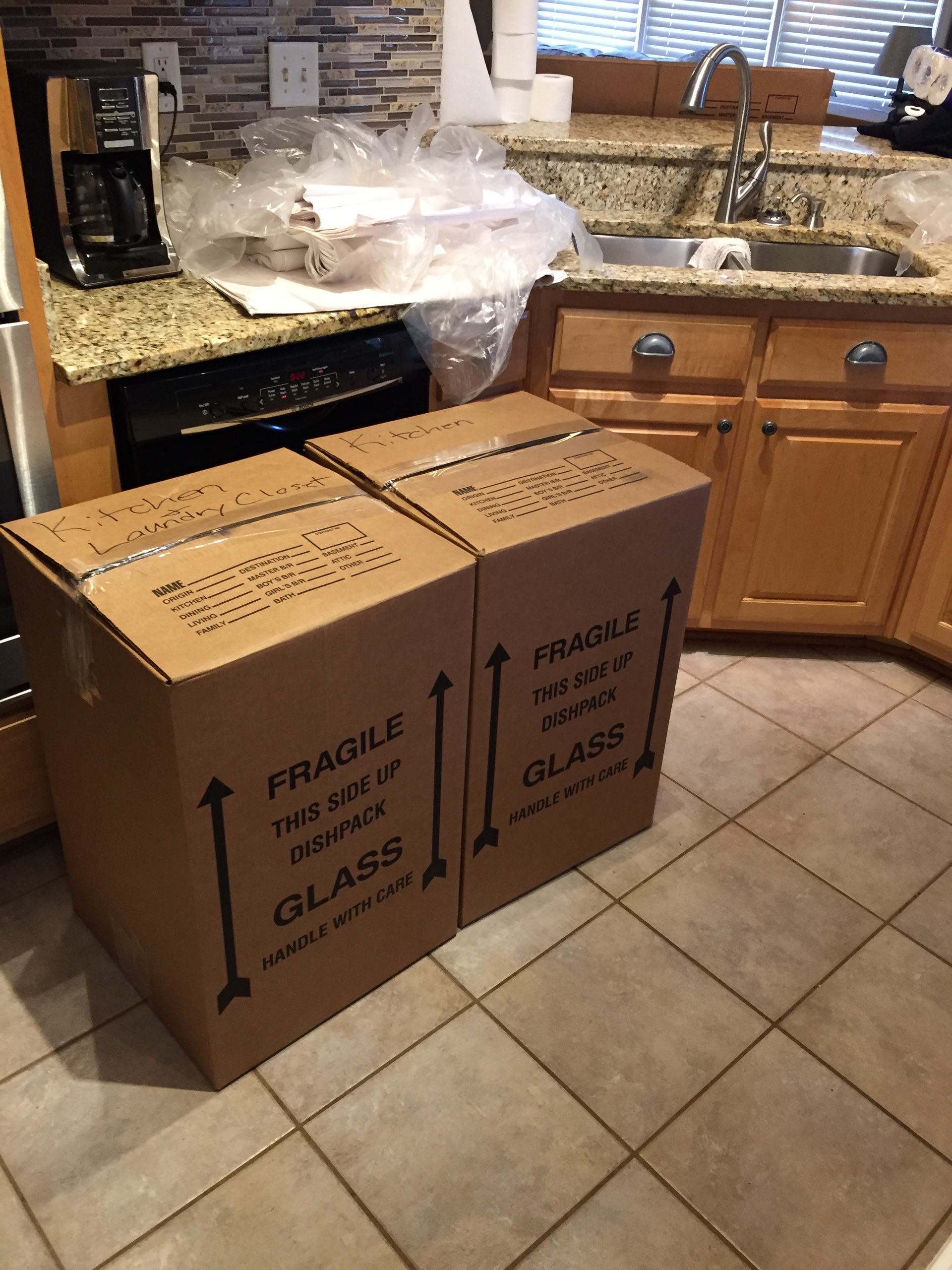
Boxes marked by room and handling — FRAGILE, GLASS, THIS SIDE UP — so each one is carried and loaded right.

Kitchen

The kitchen is the most fragile, most time-consuming room in the house — start it early. Dishes ride on their edges, not flat; glassware gets wrapped individually; and heavy items go in small boxes so nobody is lifting a 70-lb box of cookware.

  • Stand plates on edge like records, cushioned with paper — they resist breaking that way.
  • Wrap glasses and stemware individually and use a divided dish barrel.
  • Seal and bag anything that can leak; tape lids and secure knives blade-guarded.
  • Label the box you will want first: KITCHEN — COFFEE & BREAKFAST.

Bedrooms & Closets

Bedrooms pack fast if you use the space you already have. Dresser drawers can often stay full of soft items; hanging clothes move cleanest in wardrobe boxes; and a labeled hardware bag taped to each bed frame saves a frustrating reassembly.

  • Wardrobe boxes let clothes move on the hanger — no folding, no wrinkles.
  • Leave light, soft items in dresser drawers; remove anything heavy or breakable.
  • Bag and label the bed hardware and tape it to the frame or put it in your essentials box.

Living Room & Electronics

Electronics travel best in their original boxes, but a photo of the cabling and a well-padded box work nearly as well. Screens ride on edge, never flat, and cords stay with their device so nothing goes hunting for a power cable on night one.

  • Photograph the back of the TV and A/V gear before unplugging so re-cabling is obvious.
  • Move flat screens upright, on edge, wrapped and boxed — never laid flat.
  • Bag each device’s cords and remote and label them; tell the crew leader about high-value gear.

Bathrooms

Bathrooms are small but leaky. Seal every liquid, toss what you will not miss, and keep one set of toiletries out for your First-Night Essentials so nobody is digging through boxes for a toothbrush.

  • Tape or bag anything that can open and spill; double-bag the messiest.
  • Set aside a full set of toiletries for the First-Night Essentials box.
  • Dispose of old or expired medication and cleaners rather than moving them.

Garage & Outdoor Items

The garage hides the two things a truck cannot carry: hazards and fuel. Everything else — tools, gear, seasonal items — packs well in small, sturdy boxes, and long-handled tools bundle together. Drain and dry anything gas-powered before it moves.

  • Empty fuel and oil from mowers, trimmers, and generators — they cannot go on the truck.
  • Box tools in small boxes; bundle rakes, shovels, and poles and tape them together.
  • Wipe down and dry outdoor gear so it does not soil everything around it.

Fragile Items

Fragile items break from movement inside the box, not just from drops. The goal is a snug pack with little room to shift: wrap each piece, cushion the bottom and top, fill every gap, and mark the box so it is loaded and carried accordingly.

  • Wrap each item individually; never let two fragile pieces touch.
  • Cushion the bottom and top, and fill all voids so nothing can shift.
  • Mark every side FRAGILE and add THIS SIDE UP — and tell the crew what is inside.
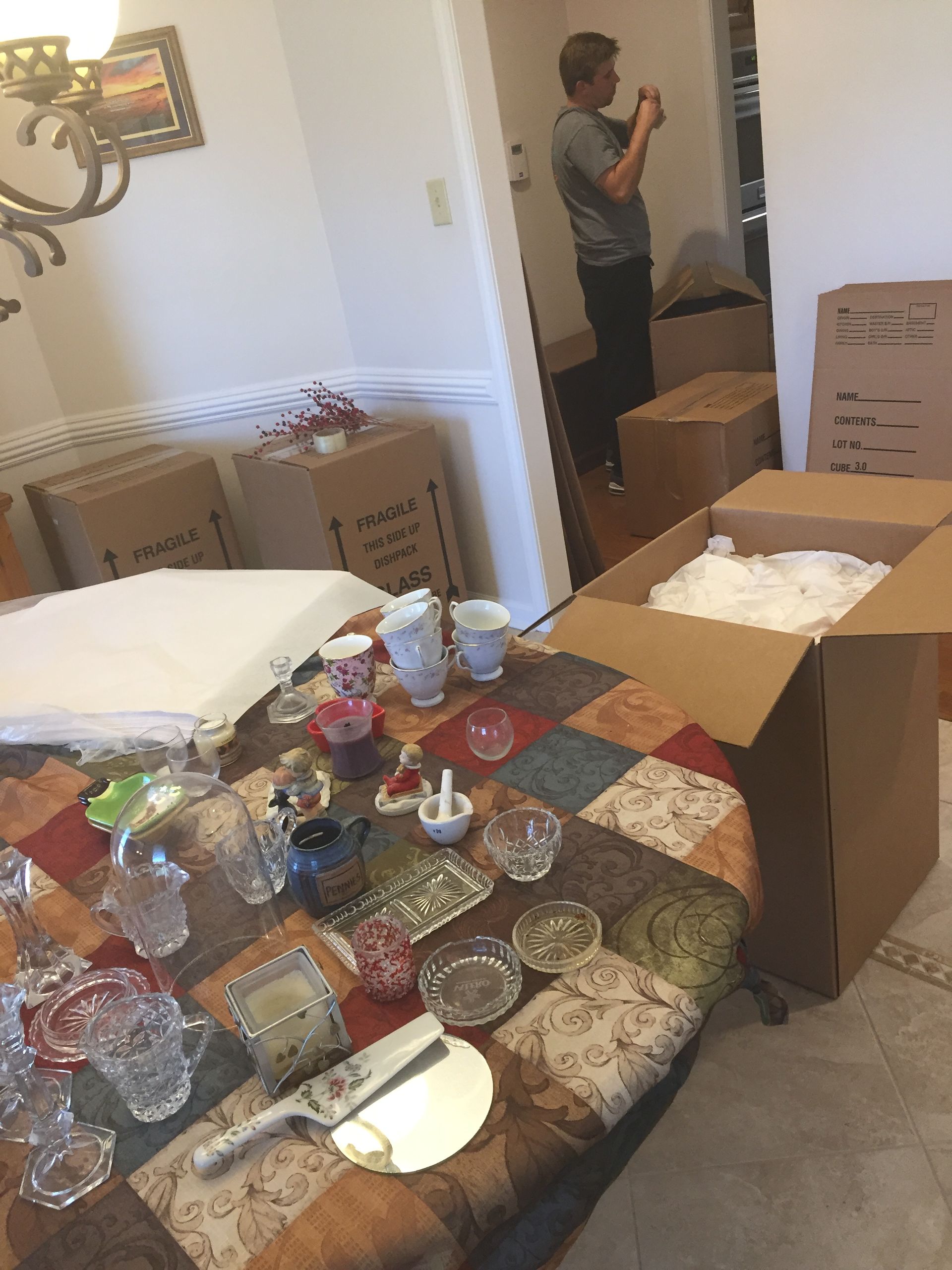
Fragile pieces laid out and wrapped individually before they are boxed, cushioned, and marked.

Items That Shouldn’t Be Packed on the Truck

Not everything belongs in one “prohibited” pile. Use the three categories below: items we cannot transport, items that need preparation before they can move, and items we recommend you keep with you because they are hard to replace.

Cannot Transport

These items cannot go on the truck.

  • Paint and household chemicals
  • Propane and pressurized tanks
  • Firearms and ammunition
  • Frozen food
  • Cleaning products (may be boxed for you, but not transported on the truck)

Requires Preparation

These can often move only when prepared correctly.

  • Aquariums — only when fully drained
  • Gas equipment emptied of fuel
  • Riding mowers — generally not moved (ramp and access limits; ask first)

Recommend Customer Transport

Keep these with you — not because they are banned, but because they are hard to replace.

  • Keys
  • Wallet or purse
  • Medication
  • IDs and passports
  • Jewelry and valuables
  • Cash
  • Important documents
  • Work laptops
  • Chargers
  • Travel bags
  • Wine or alcohol you care about
  • Irreplaceable plants or heirlooms you prefer to carry

If it shouldn’t go on the truck, separate it before your movers arrive.

From the field

Professional Packing Guide

Learn the professional packing methods our crews use every day to protect customers' belongings. This guide will continue growing as we document more real packing techniques from the field.

1. Preparing the Box

Every good pack starts with the box itself. Before a single item goes in, we build a cushioned base — a few inches of crumpled packing paper across the bottom of the box.

Crumpled paper works because it is full of air. Those pockets flex and absorb the shocks of loading, stacking, and the road, so the energy of a bump never reaches your belongings. Bare cardboard has no give — an item resting straight on the bottom takes every impact directly.

We also never let fragile items touch bare cardboard. Its edges and seams are hard and abrasive, so a cushioned layer keeps glass, ceramic, and finished surfaces off them entirely.
2. Wrapping Individual Items

Once the base is set, every fragile item is wrapped on its own. Individual wrapping does two jobs at once: it cushions each piece, and it keeps pieces from ever touching each other.

Item-to-item contact is where most breakage happens — two glasses that tap together on a bump, a plate rim knocking another plate. A full wrap of paper around each item turns hard surfaces into soft ones.

Then we wrap snugly and fill the box so nothing can move. A packed box should have no shift when you gently tilt it — movement inside the box is the enemy, and eliminating it is the whole point of a professional pack.

3. Packing Kitchen Knives Safely

Kitchen knives get their own careful routine — for the safety of your belongings and, just as importantly, for whoever opens the box.

We wrap each blade individually, bundle the wrapped knives together, then tape and clearly label the bundle. The one in the photo is marked "SHARP" with an arrow showing which end holds the blades. Finally it is positioned flat and snug inside the box so it can never slide.

A loose knife in a box is a real hazard to the person unpacking it. This simple routine protects your knives and everyone who handles the box.

4. Group Similar Items

We pack like with like. Utensils go with utensils, pantry goods with pantry goods, tools with tools — it is a small habit that pays off at both ends of the move.

Grouping makes unpacking obvious: a box of kitchen utensils empties straight into the right drawer. It distributes weight sensibly, with heavy pantry items packed low and even rather than piled on one side. And because similar shapes nest and fill the space, there is less room left for anything to shift.

5. The Finished Kitchen Box

Here is what a finished kitchen box looks like — and why. Every choice in the pack has a purpose:

  1. Heavy items packed low — pantry goods on the bottom keep the box stable and easy to carry.
  2. Empty space filled — every void packed with paper so nothing can shift in transit.
  3. Similar items grouped — utensils, pantry, and tools kept together for fast, logical unpacking.
  4. Fragile items protected — glass and ceramics individually wrapped and cushioned, never touching.
  5. Knife bundle isolated — wrapped, taped, and labeled, positioned so it is safe to unpack.
  6. Paper preventing movement — a cushioned base and filled voids so items are far less likely to shift on the road.

Rather not pack it yourself?

Titan offers full and partial packing with quality materials and the same care you would give your own home. Ask about packing when you request your free quote.

Licensed & Insured 308+ Google Reviews Serving Memphis & the Mid-South

Call Now (901) 468-7817 Free Quote No obligation